

1. During sleep or while awake
Clenching and grinding can occur during sleep or while awake. Jaw pain, tooth wear and sensitivity may accompany them; sometimes a partner first notices a sound at night. These symptoms are not exclusive to bruxism. Begin the appointment by explaining when you notice discomfort and what it interrupts, whether that is breakfast, work or sleep. This gives your clinician a useful starting point.
2. What happens at the assessment?
The dentist examines the teeth and jaw and may ask about sleep, medicines and daily habits. Considering those details together is more useful than assuming a single cause. Bring a short medication list and any observations you want to discuss. You do not need to know the cause before your appointment; your dentist will help you work through the possible explanations.
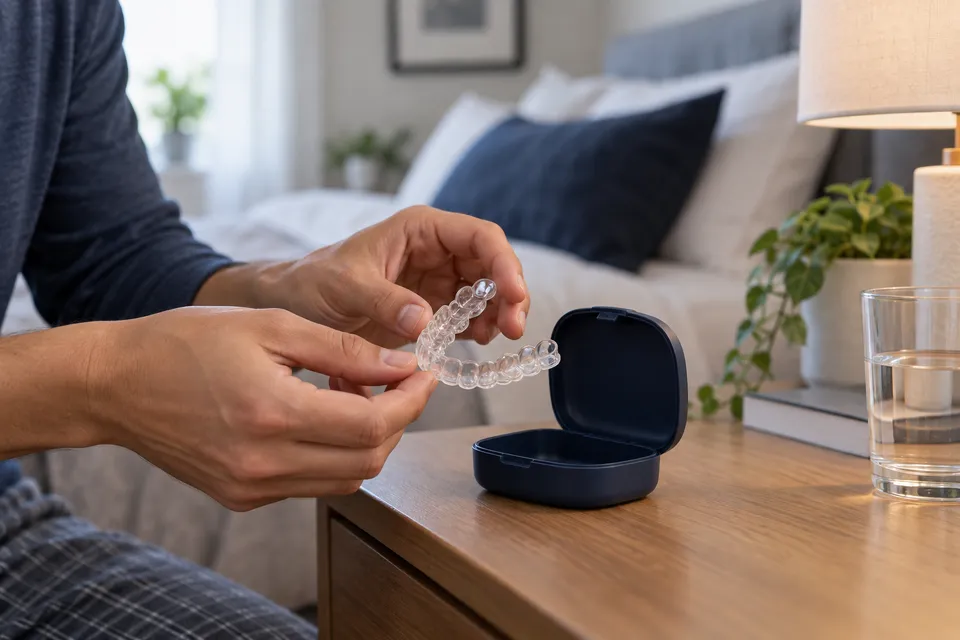
3. Protection is not the same as a cure
A splint recommended by your dentist can help protect teeth from damage. Wearing one does not necessarily stop the grinding itself. If one is advised, ask how to wear it, clean it and arrange a fit check. Discuss discomfort with your dentist instead of trimming or reshaping it yourself. Your dentist will explain how the guard fits into your care and when to have it checked.
4. Looking after your jaw and arranging follow-up care
Relaxation and a consistent sleep routine are among the supportive approaches that may be suggested. Avoiding chewing gum and hard foods can help when the jaw is painful. A few words about morning and evening discomfort can make the next discussion easier. You do not need to monitor every hour. Arrange a review for continuing pain or tooth damage rather than relying on the guard alone.